The History of Panama Viejo
The city was founded in 1519 by Pedro Arias Dávila, who settled here with around 100 other inhabitants. It quickly became the departure point for the expeditions that conquered the Inca Empire in Peru and a key port for ships traveling to and from the Spanish colonies.
That prosperity ended in 1671, when the pirate Henry Morgan attacked and destroyed the city. The ruins remained as a historic site, and Panama Viejo was inscribed on the UNESCO World Heritage List in 2003. The new capital was later built farther west, which is why the original city looks the way it does today: an open-air archaeological site rather than a living neighborhood.
What to See at Panama Viejo
Most of what you’ll see is foundations and partial walls, so a little imagination helps. A visitor center and small museum provide context, and carts shuttle visitors between the entrance and the main square, since the site is spread out. The main highlights are:
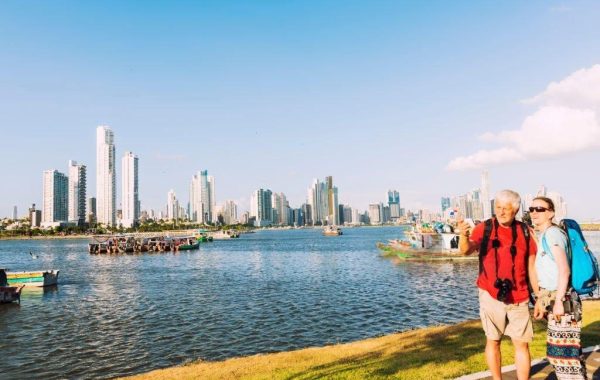
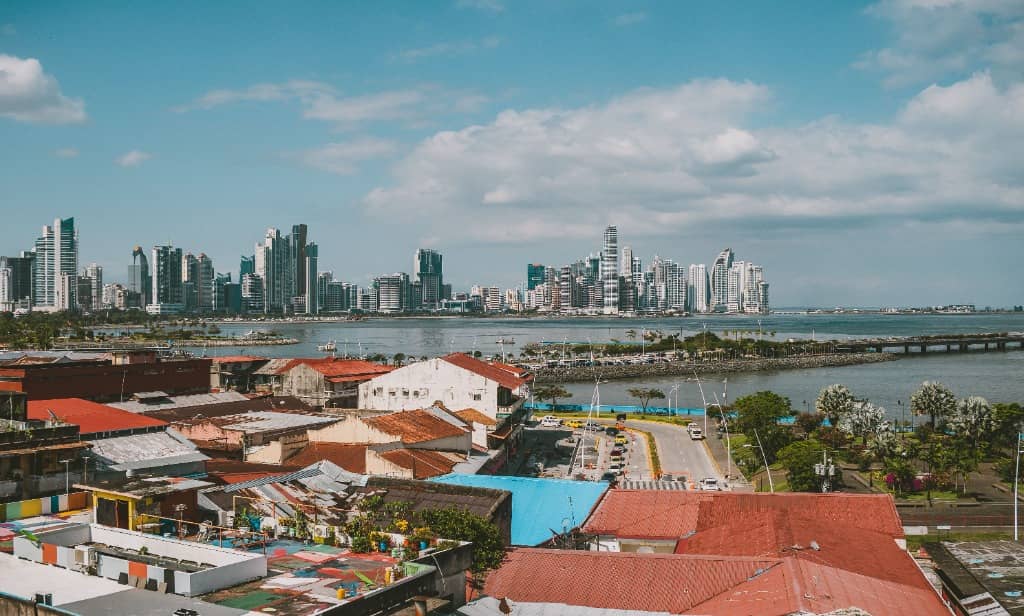
- Cathedral Tower: the best-preserved structure at about 30 meters high. You can climb it for views of the ruins and the modern skyline, a striking contrast between old and new Panama.
- Plaza Mayor: the social, religious, political, and economic heart of the old city, measuring around 69 by 57 meters.
- Jesuit Church and Convent: founded in 1571 and described by 1607 as a poor convent.
- Houses: residential remains around the plaza, labeled on the site map as the West houses and Terrin houses, of which only the bases survive.
- Plaza Mayor Museum: an on-site museum that helps visitors understand what the city looked like.
A handicraft market near the site sells local crafts and souvenirs.
Opening Hours and Admission
Panama Viejo is open Tuesday through Sunday from 8:30 a.m. to 5:30 p.m., with the ticket office closing at 4:30 p.m. The site is closed on Mondays. Admission has been listed at 17 balboas (equivalent to US dollars), though prices can change, so confirm before you go. Children under six don’t pay on family visits, and photography is allowed.
Groups of up to 25 people don’t need a reservation and can buy tickets at the box office. Allow around one to two hours for a relaxed visit, and bring sunscreen and water, as most of the site is exposed.
How to Get to Panama Viejo
Panama Viejo is about ten minutes by car or roughly 30 minutes by bus from downtown Panama City. A taxi or ride-hailing app is the simplest way to go, especially if you’re pairing it with other stops in the city.
Pairing Panama Viejo With the Biomuseo Panama
Panama Viejo tells the story of the city’s colonial past, while the Biomuseo Panama tells the story of how the isthmus formed. The museum is the only building designed by architect Frank Gehry in Latin America, and its colorful, angular design is a landmark in itself.
Inside, exhibits explain how the rise of the isthmus separated one great ocean into the Atlantic and the Pacific and triggered an enormous migration of animals between North and South America, an idea summed up as Panama’s “bridge of life.” The Panamarama room immerses visitors in the country’s wildlife with screens on the walls and ceiling, and another section charts key dates in Panamanian history.
The Biomuseo has been listed as open Monday to Friday from 9 a.m. to 3 p.m. and on weekends from 10 a.m. to 3 p.m., with admission around 20 balboas. Check current hours before your visit.
Panama Viejo at a Glance: A Short Timeline
- 1519: Pedro Arias Dávila founds the city on Panama’s Pacific coast.
- 1571: the Jesuit church and convent is founded near the main square.
- 1607: the convent is described as a poor one, built with donations.
- 1671: Henry Morgan attacks and destroys the city.
- 2003: Panama Viejo is inscribed on the UNESCO World Heritage List.
Many travelers first visit Casco Viejo, the colonial quarter of today’s capital, and then wonder where the city was actually founded. Panama Viejo is the answer, and seeing both neighborhoods shows how the city moved and grew over the centuries.
Tips for Visiting Panama Viejo
Go in the morning, when it is cooler, and wear a hat, sunscreen, and comfortable shoes, since the site is large and open. Use the shuttle carts to reach the Plaza Mayor and the Cathedral Tower, then walk back through the ruins at your own pace.
Read the information panels along the route. The ruins are mostly low walls and foundations, and the illustrations on site explain what each building once was and where it stood. That context turns a field of stones into a recognizable city, and it is the best reason to take your time.
Where to Stay in Panama City
A well-located base makes it easy to combine Panama Viejo, the Biomuseo, and the rest of the capital. Travelers looking for the luxury places to stay in Panama City will find that The Collection offers an upscale option, while the best places to stay in Panama City through Wynwood House put you within easy reach of the city’s main attractions.
Frequently Asked Questions
Why is it called Panama Viejo?
Because it is the original Panama City, founded in 1519 and destroyed by Henry Morgan in 1671. The modern capital grew elsewhere, leaving the old city as an archaeological site.
How long does it take to visit Panama Viejo?
Plan about one to two hours to see the Cathedral Tower, the Plaza Mayor, and the main ruins, with extra time if you visit the museum or the handicraft market.
Can you visit the Biomuseo and Panama Viejo in one day?
Yes. Both are manageable in a single day by taxi. Since the Biomuseo closes at 3 p.m., visit it first and head to Panama Viejo in the afternoon.