Getting to Choquequirao isn’t as simple as taking a bus and getting off right in front of a citadel. To explore this ancient Inca settlement, you have to hike for several days through the Apurímac Canyon, navigating changes in elevation, Andean landscapes, and steep sections.
That’s why the Choquequirao hiking trail attracts travelers who want to explore an archaeological site without sacrificing the adventure. Unlike Machu Picchu, here the journey itself is a major part of the experience.
What makes Choquequirao special?
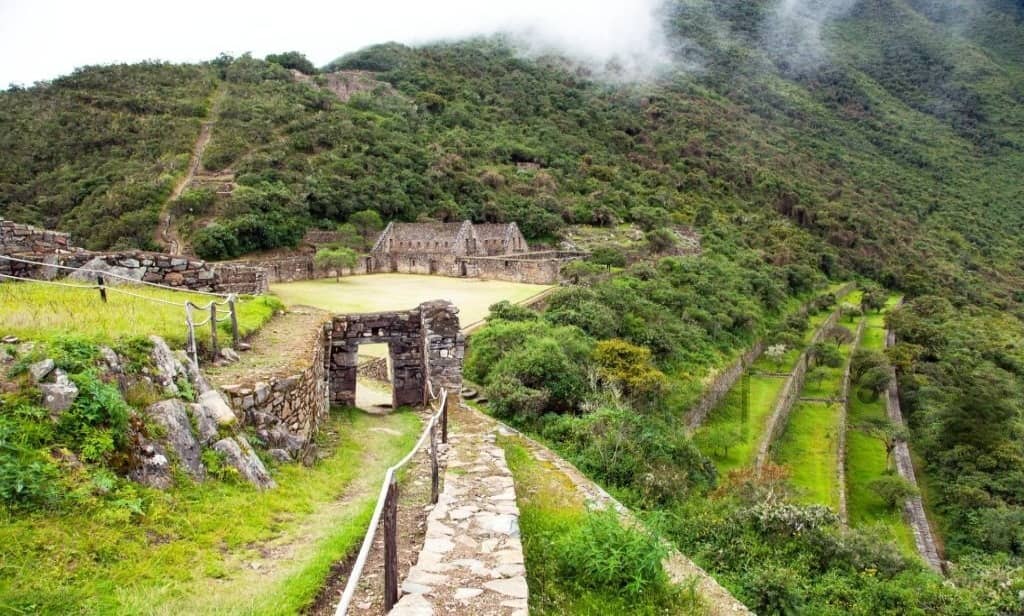
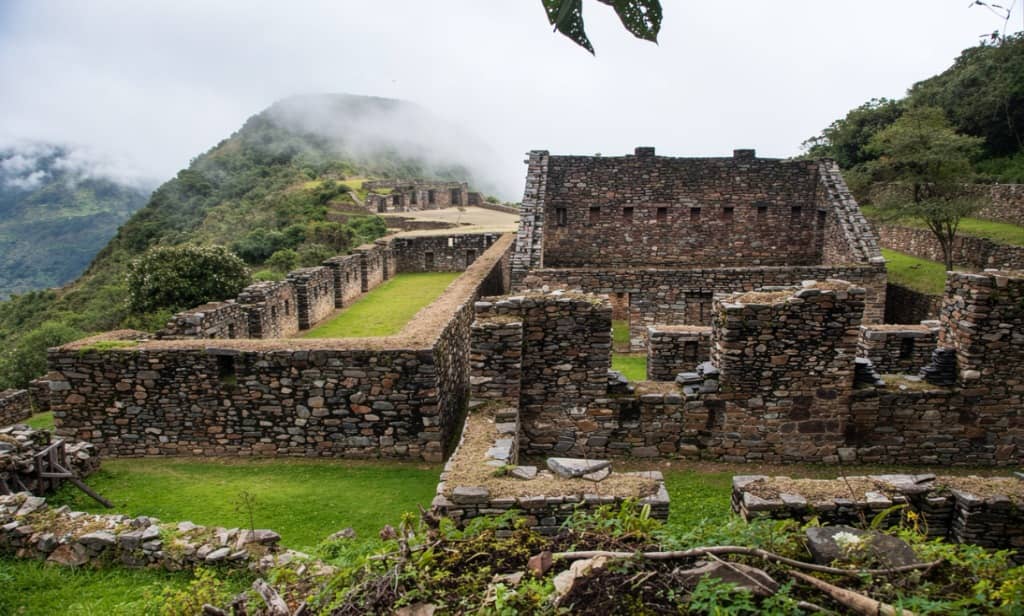
Choquequirao is located in a hard-to-reach area, surrounded by mountains and vegetation, between Cusco and Apurímac. This citadel was built around 1536, and much of the complex remains to be explored and restored.
The site features plazas, fountains, storage areas, temples, terraces, and other spaces distributed across nine sectors. One of its best-known features is the terraces decorated with llama figures, carved into the mountainside.
The Cusco Regional Directorate of Culture notes that the traditional route begins in Cachora, along the Cusco-Abancay highway. From there, the trail descends toward the Apurímac River and continues to the archaeological complex.
Here’s what the Choquequirao hiking trail is like
The classic route is usually organized as a four-day, three-night trip, although there are also three- and five-day options. Additionally, the schedule and campsites vary depending on the tour operator, but the hike remains equally challenging
Day 1: Capuliyoc – Playa Rosalina
The trek begins in Capuliyoc, at about 2,900 meters above sea level. From there, a long descent begins toward the Apurímac Canyon, passing through Chiquisca until reaching Playa Rosalina, near the river.
This first section can take about 5 or 6 hours, depending on the pace and the number of stops.
Day 2: Playa Rosalina – Marampata – Choquequirao
After crossing the Apurímac River, the trail begins an ascent toward Santa Rosa and then on to Marampata. From there, it’s still a ways to Choquequirao.
Day 3: Tour of Choquequirao
Once at the citadel, it’s worth spending several hours exploring its different areas. You can visit the main plaza, the ceremonial spaces, the water channels, the platforms, and the terraces featuring llama figures.
Then the return journey begins toward Marampata and the campsites along the route. Depending on the chosen itinerary, this day may end in Chiquisca.
Day 4: Chiquisca – Capuliyoc – Cusco
The final day brings another major challenge: climbing back up from the lower elevations to Capuliyoc. The final stretch may take about four or five hours of hiking before continuing by road to Cusco.
Elevation Gain: The Real Challenge of the Hike
More than the number of kilometers, what makes this hike demanding are the changes in elevation. On the classic route, you can go from about 2,900 meters in Capuliyoc to nearly 1,500 meters along the Apurímac River, and then climb back up to approximately 3,050 meters in Choquequirao.
Keep in mind that if you’re not used to hiking for several hours, it’s best to spend a few days in Cusco before setting out.
When is the best time to hike the Choquequirao trail?
The dry season is generally the best time to hike the trail, especially between April and October. This is because during the rainy months, you’re more likely to encounter wet trails and less favorable hiking conditions.
Additionally, trail conditions can change; in February 2026, the Cusco Regional Directorate of Culture temporarily suspended access due to weather conditions and the state of certain sections of the trail. Therefore, before booking the trek, it’s important to confirm that access is permitted.
What should you pack for hiking days?
Your backpack should be practical and contain only what you need for several days in the mountains, including:
- Hiking boots with good traction.
- Lightweight clothing for warm areas and warm layers for the evenings.
- Waterproof jacket.
- Sunscreen, sunglasses, and a hat.
- Water and snacks.
- Headlamp.
- Trekking poles.
- Insect repellent.
- Personal first-aid kit.
- Cash.
It’s also important to bring a waterproof bag to protect your clothes and electronic devices.
Choquequirao or Machu Picchu?
Although both sites are linked to the Inca legacy, the experience is quite different.
At Machu Picchu, there are different ways to reach the site more quickly. In contrast, at Choquequirao, the hike is an essential part of the visit and requires several days of physical exertion.
The reward lies in exploring a much less accessible citadel and discovering archaeological sites in a setting where the mountains and the canyon play just as prominent a role as the structures themselves.
To enter the Choquequirao Archaeological Park, general admission costs S/60 for adults, S/30 for college students, and S/15 for schoolchildren, with visiting hours from 7:00 a.m. to 4:00 p.m.
How can I continue hiking to Machu Picchu?
For those seeking an even greater challenge, there are trails that connect Choquequirao with the Machu Picchu area through the Vilcabamba Mountain Range.
This isn’t the classic four-day trek, but a much longer journey that requires more preparation and time. So, if your goal is to visit both places, it’s best to plan each leg of the journey based on your physical condition and the number of days you have available.
What to do in Cusco after the trek?
After several days of hiking, you can set aside time to explore other landscapes in the region. One option is the Rainbow Mountain of Palccoyo, located about 100 kilometers south of Cusco and at an elevation of approximately 4,900 meters.
Unlike other colorful mountains, the hike to the main viewpoint takes about 45 minutes and involves few elevation changes. That said, the altitude is still considerable, so Peru Travel recommends acclimatizing for at least two days before taking the hike.
Where to stay in Cusco?
Planning a multi-day trek also means thinking about where to stay before and after the hike.
That’s why at Wynwood House you’ll find fully furnished apartments in Cusco, featuring equipped kitchens, modern design, and separate living spaces that offer greater comfort. Plus, their locations provide easy access to restaurants, bars, and tourist areas.
Book your stay and enjoy Cusco with the peace of mind that everything is just a few minutes away.
FQs
How much does it cost to enter Choquequirao?
As a reference, the rates published by Perú Travel are S/60 for adults, S/30 for college students, and S/15 for schoolchildren. Before traveling, it’s a good idea to confirm that the prices and admission conditions are still in effect.
Is there cell phone service along the route to Choquequirao?
Coverage may be limited or nonexistent in several sections of the route, especially in the more remote areas and inside the canyon. Therefore, it’s advisable to let family or friends know your itinerary and to keep your cell phone charged, as well as bring a portable battery.
Is it necessary to hire a guide for the hike?
It’s not always required, but hiring a guide can be helpful if you’re unfamiliar with the trail or want to better understand the history of Choquequirao. You can also book packages that include transportation, meals, camping, and porters to carry your luggage.