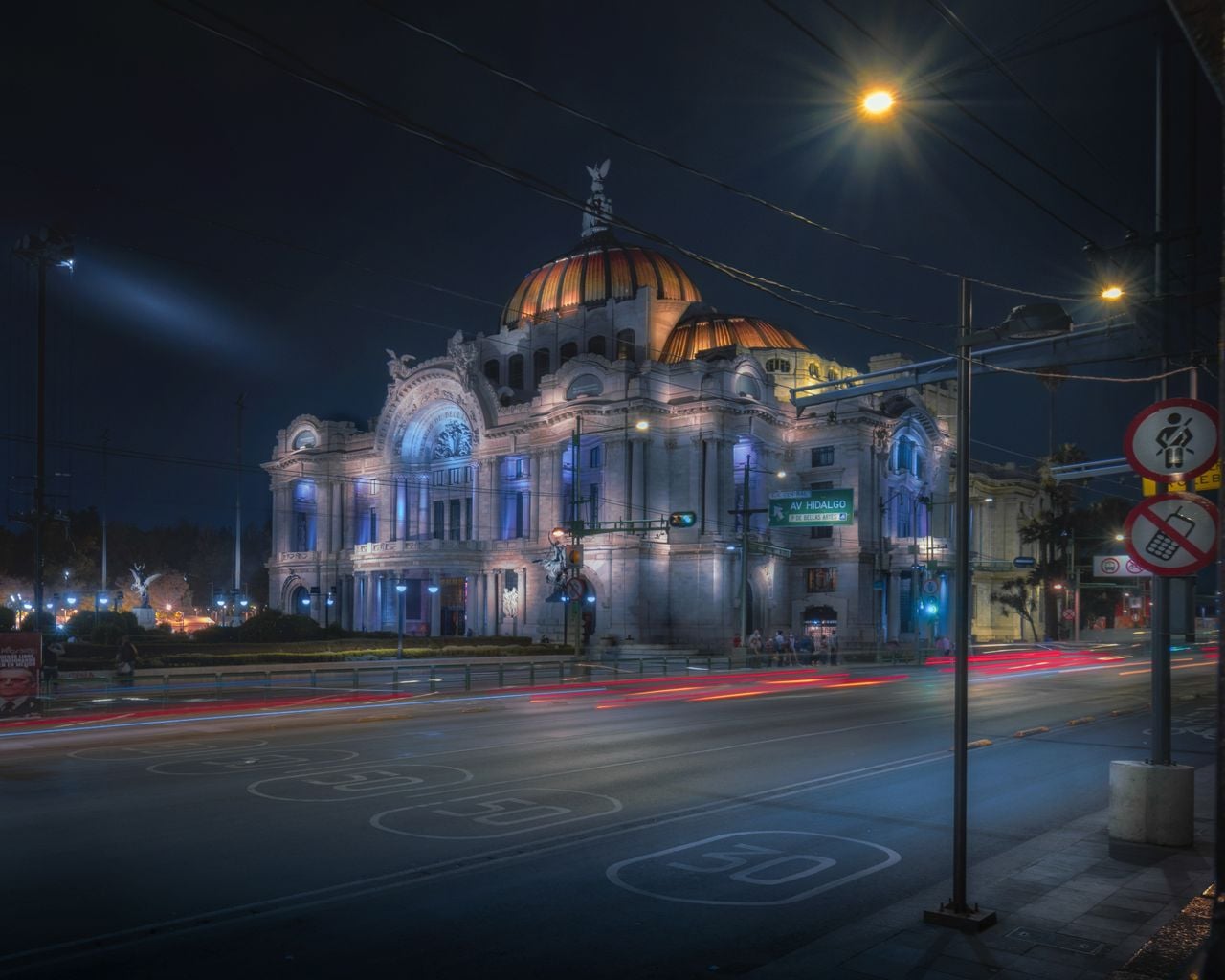
Few buildings capture the soul of a city as completely as the Palacio de Bellas Artes does for Mexico City. Rising in white Carrara marble at the edge of the historic center, this opera house and cultural palace has become a national symbol — instantly recognizable and home to some of the most important art ever produced in Mexico. Its history spans revolution, economic collapse, and one of the most ambitious construction projects of its era.
Understanding the Palacio de Bellas Artes means understanding a building that took three decades, four administrations, and a complete shift in national ideology to complete. What emerged is one of the finest examples of eclectic architecture in the Americas.
The Origins of a National Theater
The story of the Palacio de Bellas Artes begins in 1901, during the centennial preparations for Mexico's independence. President Porfirio Díaz, eager to project an image of national prosperity, commissioned a grand new National Theater to replace the aging Teatro Santa Anna, built in 1842. The project went to Italian architect Adamo Boari, who delivered his first eighteen plans by 1904, clearing the way for demolition of the old theater and the start of excavation.
Boari envisioned a building matching the grandeur of Europe's great theaters while expressing something distinctly Mexican — an eclectic design blending Art Nouveau and Art Deco, as ambitious as the building's planned four-year timeline.
A Construction Interrupted by Revolution
That timeline did not survive contact with history. The Mexican Revolution erupted before the theater was complete, plunging the country into crisis and forcing Boari to return to Italy. He continued contributing from abroad, sending plans and updates even as construction in Mexico City ground to a halt.
A brief attempt to resume work happened between 1918 and 1919 under architect Antonio Muñoz during the presidency of Venustiano Carranza, but renewed instability forced another pause. The half-finished palace stood unfinished for over a decade.
Completion Under a New Vision
It was not until 1930, under President Pascual Ortiz Rubio, that construction resumed in earnest — this time with a different mandate. The administration insisted that Boari's original plans be respected, that completion be achieved economically, and that the finished building serve the social conditions of its time rather than an elite audience. This shift transformed the project: rather than a theater for the privileged few, it would become a space for artistic expression accessible to all Mexicans. It was at this point the building took its definitive name — the Palacio de Bellas Artes.
Architect Federico Mariscal took charge of this final phase, reconciling Boari's eclectic vision with emerging 1930s design tendencies, and bringing in additional designers and sculptors to complete the building's intricate finishes.
An Unusual Engineering Footnote: The Sinking Palace
One of the more curious facts about the Palacio de Bellas Artes relates to the ground beneath it. Mexico City's historic center has experienced severe subsidence for over a century, and the palace itself began sinking as early as 1907. By 1921, it had already sunk more than 1.80 meters, and the effects remain visible today — the building now sits several meters below the level of the surrounding street, a physical record of the soft lakebed soil beneath the capital.
The Art and Artists Behind the Palace
Sculpture and Facade Details
The exterior facades incorporate four sculptural groups created by André Allar and Paul Gasq, originally intended for Mexico's legislative palace before finding their home here. The facades combine Carrara marble from Italy with Mexican marble from various regions. Central ornamentation was overseen by Italian artist Leonardo Bistolfi, while side facade reliefs were the work of sculptors Adamo Boari and G. Fiorenzo. At the front plaza stand four Pegasus sculptures by Catalan sculptor Agustín Querol, previously located in the Zócalo before being moved here.
The Famous Fire Curtain and Interior Details
Inside the main theater, a glass ceiling panel by Hungarian artist D. Maroti crowns the auditorium. But the building's most famous interior feature is its fire curtain — unique among the world's opera houses. Weighing 24 tons and crafted by Tiffany Studios of New York, it depicts Mexico's two iconic volcanoes, Popocatépetl and Iztaccíhuatl, in shimmering glass mosaic.
Surrounding the curtain is an arch decorated with mosaics titled "El Teatro a Través de las Edades" by Hungarian artist Geza Marotti, along with a stained-glass window depicting Apollo and the nine muses. The stage machinery was engineered by A. Rosemberg of Germany. On the main facade, sculptures representing Harmony, Sorrow, Happiness, Peace, and Love — also by Bistolfi — complete the building's allegorical program.
Mexican Muralism on the Upper Floors
Perhaps the greatest treasure of the Palacio de Bellas Artes lies on its upper floors, where some of the most significant murals in Mexican history are displayed. Works by Diego Rivera, José Clemente Orozco, David Alfaro Siqueiros, and Rufino Tamayo cover the walls across four levels, forming one of the most important collections of Mexican muralism in the country. For many travelers, these murals are the single most compelling reason to step inside.
Where to Stay Near the Palacio de Bellas Artes
The Palacio de Bellas Artes sits at the edge of Mexico City's historic center, making it an easy stop for travelers staying near the city's core cultural attractions.
For travelers seeking a premium experience, explore the best luxury places to stay in Mexico City — a curated selection of exceptional properties in the city's finest locations.
For a wider range of styles and budgets, discover the top places to stay in Mexico City — well-located options that put the Palacio de Bellas Artes and the rest of the historic center within easy reach.
FAQs
Why is the Palacio de Bellas Artes in Mexico City famous?
The Palacio de Bellas Artes is famous for its eclectic Art Nouveau and Art Deco architecture, its unique 24-ton Tiffany glass fire curtain depicting Mexico's volcanoes, and its world-class murals by Diego Rivera, José Clemente Orozco, David Alfaro Siqueiros, and Rufino Tamayo. It is widely regarded as one of Mexico's most important cultural buildings and a defining symbol of Mexico City.
How long did it take to build the Palacio de Bellas Artes?
Construction began in 1904 and was not completed until 1934 — roughly three decades, though it was originally planned for just four years. The project was repeatedly interrupted by the Mexican Revolution and the instability that followed, pausing for extended periods before resuming under President Pascual Ortiz Rubio in 1930 and being completed under architect Federico Mariscal.
Why is the Palacio de Bellas Artes sinking?
The palace sits on the soft, water-saturated soil of what was once Lake Texcoco, the lakebed on which Mexico City was built. This soil has caused severe subsidence across the historic center for over a century. The building began sinking as early as 1907 and had sunk more than 1.80 meters by 1921. Today, visitors can still see it sitting noticeably below street level.