Cartagena de Indias greets you with warm colors, Caribbean sounds, and streets built to be explored. Getting around Cartagena is generally straightforward, but knowing your options in advance makes a real difference — especially when you want to move efficiently between the walled city, the beach neighborhoods, and the islands offshore.
This guide covers everything you need to know about getting around Cartagena, from arriving at the airport to reaching the turquoise waters of the Islas del Rosario.
Getting from the Airport to the City
Rafael Núñez International Airport (CTG) is one of the most conveniently located airports in Colombia — just 15 to 25 minutes from the main tourist areas depending on traffic. Getting from the airport to the historic center, Getsemaní, or Bocagrande is simple and inexpensive.
Authorized Taxis
The safest and most recommended option is the official taxi booth inside the arrivals terminal. Tell the attendant your destination and you’ll receive a ticket with a fixed, pre-agreed fare. Pay the driver directly at the end of the journey. There is no meter and no negotiation required — the price is set and transparent. Avoid accepting rides from drivers who approach you unsolicited outside the terminal, as these are not regulated.
Ride-Hailing Apps
Apps including Uber, Didi, and InDriver operate in Cartagena and are a popular alternative for visitors who prefer knowing the fare upfront. InDriver is particularly widely used as it allows you to propose a price and negotiate with drivers directly. These apps offer more transparency than street taxis and are a convenient option throughout your stay, not just from the airport.
Getting Around Cartagena on Foot
Once you’re based in the city, walking is the best way to explore the historic center. The walled city — known as the Ciudad Amurallada — and the neighboring district of Getsemaní are compact, pedestrian-friendly, and full of details that reward a slow, unhurried pace. Every painted doorway, flowering balcony, and cobblestone alley offers something worth stopping for.
Mornings and late afternoons are the most comfortable times to walk, as the midday heat can be intense. Wear comfortable shoes, carry water, and bring sunscreen — the Caribbean sun is strong year-round. Most attractions, restaurants, and plazas inside the walled city are within easy walking distance of each other.
Taxis Around the City
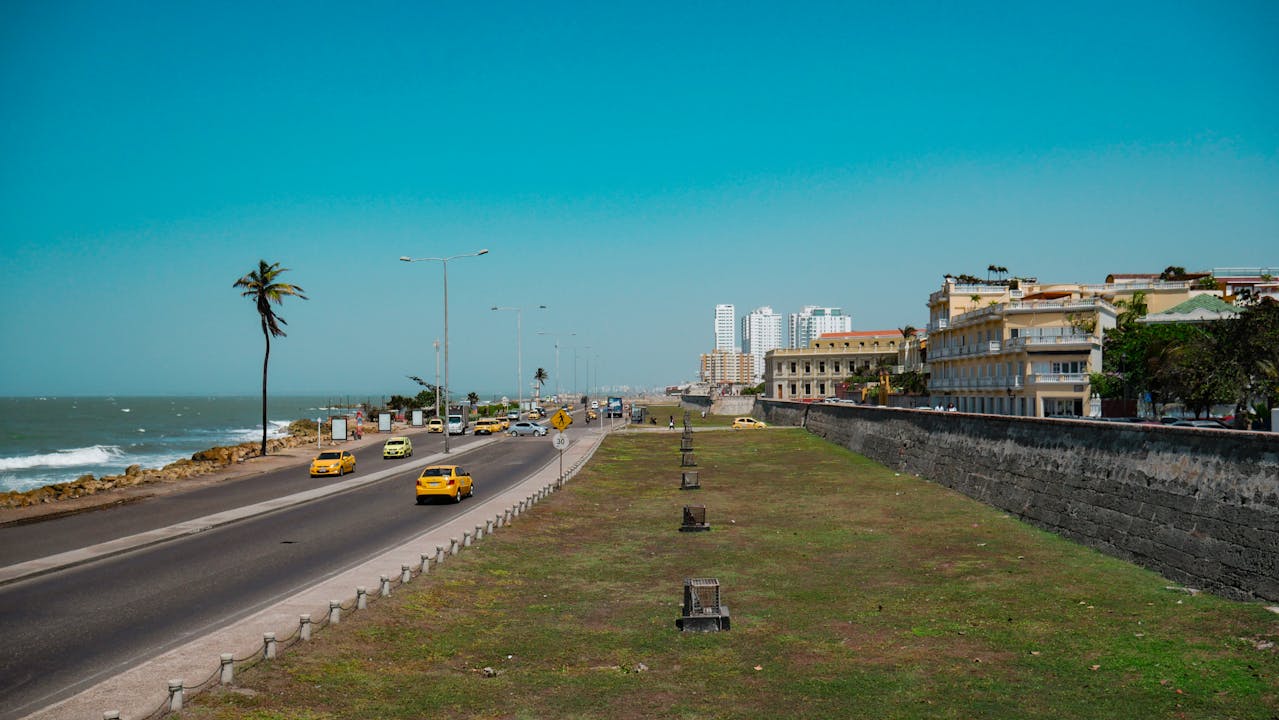
For longer distances — such as traveling from the walled city to Bocagrande’s beaches or to the Castillo de San Felipe de Barajas — yellow taxis are the most practical motorized option. They are easy to find throughout the city and affordable.
City taxis in Cartagena do not use meters. Fares are based on a zone-pricing system, so always agree on the price before getting in. Use ride-hailing apps as a reference for what a fair fare looks like, then negotiate with street taxis accordingly. Carry cash in small denominations, as drivers often have limited change.
Approximate reference fares:
- Walled City to Bocagrande: 10,000 – 15,000 COP
- Getsemaní to Castillo de San Felipe: 8,000 – 12,000 COP
- Bocagrande to the Airport: 15,000 – 20,000 COP
Transcaribe — The City Bus Network
Cartagena’s modern bus rapid transit system, Transcaribe, is an affordable and air-conditioned option for moving along the city’s main corridors. The articulated buses run on dedicated lanes, helping avoid the worst traffic. To use it, purchase and top up a rechargeable card at a main station. It is particularly useful along Avenida Santander, which runs along the seafront connecting several key areas. A good option for travelers comfortable with urban transit who want to move around economically.
Getting to the Islands
No visit to Cartagena is complete without a day trip to the surrounding islands. Getting around Cartagena includes reaching some of the most beautiful Caribbean waters in Colombia, and there are two main options.
Boats to the Islas del Rosario
The most popular way to reach the Islas del Rosario and nearby beaches is by speedboat or catamaran from the Muelle de la Bodeguita, just outside the walled city near the Torre del Reloj. Dozens of agencies offer morning day trips with packages that typically include transport and island time, with optional activities like snorkeling. Compare what’s included before booking, as prices and quality vary. A port tax is payable in cash at the dock, and booking through a reputable agency or your hotel a day in advance helps avoid pressure from last-minute vendors at the waterfront.
Land Route to Playa Blanca, Barú
For Playa Blanca on the Barú peninsula, there is also an overland option. Taxis and shuttle services cross the bridge to Barú, with the journey taking around 60 to 90 minutes depending on traffic. This is a good alternative for travelers who prefer to avoid the boat crossing, though the road can be busy during peak season.
Where to Stay in Cartagena
Your accommodation choice shapes how easy getting around Cartagena will be. Staying inside or close to the walled city puts you within walking distance of most historic sites, restaurants, and transport connections.
For travelers looking for a premium experience, explore the best luxury places to stay in Cartagena — a curated selection of high-end properties that combine exceptional design with prime locations in the city.
For a wider range of styles and budgets, discover the top places to stay in Cartagena — stylish, well-located options that make exploring the city effortless from day one.
FAQs
Is Cartagena easy to get around as a tourist?
Yes — Cartagena is one of the more visitor-friendly cities in Colombia for getting around. The historic center and Getsemaní are compact and walkable, the airport is close to the main tourist areas, and taxis and ride-hailing apps are widely available. For day trips to the islands, organized tours from the city dock make logistics simple even for first-time visitors.
Should I use taxis or apps in Cartagena?
Both are viable options. Ride-hailing apps like InDriver and Uber offer the advantage of upfront pricing and a record of your journey, making them a more transparent choice. Street taxis are plentiful and convenient but require you to negotiate the fare before getting in. Using an app as a price reference before negotiating with a street taxi is a practical approach that many experienced travelers use.
How do I get to the beaches from central Cartagena?
The closest beaches to the walled city are in Bocagrande, reachable by taxi in around 10 to 15 minutes for approximately 10,000 to 15,000 COP. For the more scenic beaches at the Islas del Rosario or Playa Blanca in Barú, organized boat tours depart every morning from the Muelle de la Bodeguita, or you can reach Barú by land in around 60 to 90 minutes by taxi or shuttle.