Bogotá street art is not decoration. It is argument, memory, protest, and pride — painted across the walls of a city that has lived through enough history to fill a thousand murals. Walk almost any neighborhood in the Colombian capital and you will encounter it: vast compositions rising five stories high, intricate stencils in alley corners, political slogans rendered with the precision of fine art, and portraits of ordinary people that stop you mid-stride.
Bogotá is widely regarded as one of the great street art cities in the world. Its politically engaged population, long tradition of graphic expression, sprawling urban canvas, and an estimated 8,000 resident street artists have created a scene that is genuinely extraordinary — layered, contradictory, and constantly evolving. This guide shows you where and how to experience it.
Why Bogotá Became a Street Art Capital
The story of Bogotá street art is inseparable from the city’s political and social history. For decades, the walls of the capital served as a public forum for communities with no other platform — a place where artists, activists, and citizens could speak directly to their city. What began as clandestine expression gradually became something more complex: a cultural movement that the city itself came to acknowledge, even as its legal status remained ambiguous.
Today, Bogotá street art occupies a peculiar middle ground — not strictly legal, but not outright banned either. The authorities retain the right to approve or prohibit specific locations, putting the city’s walls in constant negotiation between artistic freedom and official oversight. This tension is part of what gives Bogotá street art its edge. The works on these walls are not corporate commissions or tourist-friendly decoration; they carry real stakes.
The Best Neighborhoods to See Bogotá Street Art
La Candelaria — History and Murals Side by Side
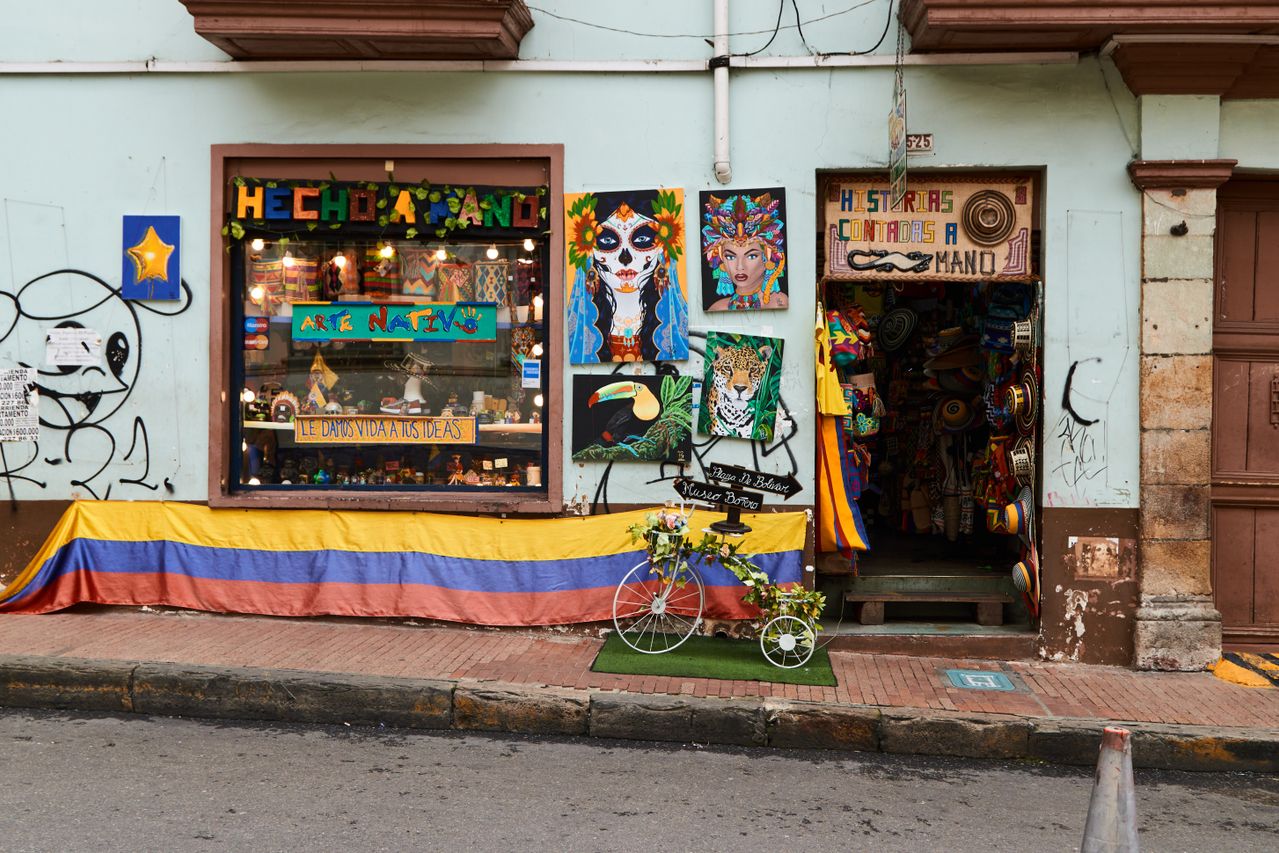
The colonial heart of Bogotá is also one of its richest concentrations of street art. La Candelaria’s old stone buildings, narrow streets, and densely layered history make it the ideal backdrop for murals that engage with Colombia’s past and present simultaneously.
The neighborhood is home to universities, cultural institutions, and political organizations, and the art on its walls reflects that intensity — indigenous heritage, armed conflict, environmental activism, and portraits of historical figures rendered in styles ranging from photorealistic to boldly abstract.
Chapinero and the Zona Rosa — Contemporary and Cosmopolitan
Moving north from the historic center, Chapinero and the streets around the Zona Rosa offer a different register of Bogotá street art — more contemporary in style, more international in reference, and often more playful in tone.
The streets around Calle 26, the arterial road leading to El Dorado airport, are particularly rich in large-format murals covering entire building facades, visible from long distances and among the most dramatically scaled examples in the city.
Usaquén and the Northern Districts — Art in Unexpected Places
Street art in Bogotá is not confined to the neighborhoods associated with the city’s more turbulent history. The northern districts, including Usaquén, have their own quieter street art presence — smaller in scale but no less considered in execution. Finding a striking mural where it was least expected is one of the pleasures of paying close attention in Bogotá.
The Bogotá Graffiti Tour — Seeing the Art Through the Artists’ Eyes
The single most valuable way to experience Bogotá street art is the city’s celebrated Graffiti Tour — a guided walk led by street artists who have painted these walls and who explain not just what the art depicts, but why it was made, how it got there, and what it costs the artists to put it there.
The tour covers La Candelaria and surrounding streets, contextualizing individual works within Bogotá’s political and cultural landscape. Guides speak frankly about well-known local artists — including DjLu, Guache, Erre, Lesivo Bestial, Ledania, and Ceroker — and the ongoing tensions between artistic freedom and regulatory control. The tour operates on a donation basis, which reflects the underground ethics that shaped the movement.
For any visitor who wants to understand Bogotá street art as more than a visual experience, this tour is indispensable.
Tips for Exploring Bogotá Street Art
- Walk, don’t drive — the best murals are discovered at walking pace, in details and angles that disappear from a moving vehicle
- Bring a camera with plenty of storage — Bogotá street art rewards close observation and the light changes dramatically through the day
- Go on weekdays for a quieter experience; La Candelaria in particular gets busy on weekends with both tourists and locals
- Combine street art with a visit to the Museo de Arte Urbano if you want to see archival work and learn the deeper history of the movement
- Book the Graffiti Tour in advance during high season — it fills up quickly and for good reason
Where to Stay in Bogotá
Staying close to La Candelaria or Chapinero puts you within easy reach of the city’s most concentrated street art corridors. Both neighborhoods also offer quick access to the rest of the city.
For travelers looking for a premium experience in the Colombian capital, explore the best luxury places to stay in Bogota — a curated selection of exceptional properties that combine design, comfort, and prime Bogotá locations.
For stylish, well-located options across a range of budgets, discover the top places to stay in Bogota — properties chosen for their character and proximity to everything Bogotá has to offer, including its extraordinary urban art scene.
FAQs
Is Bogotá street art legal?
Bogotá street art occupies a legally ambiguous position. It is not outright illegal, but it is also not freely permitted everywhere — the city’s authorities retain the right to approve or prohibit specific locations. This means artists operate within a negotiated space rather than under a clear legal framework. The situation has evolved considerably over the past two decades, and many large-format murals are now created with official awareness or tacit approval, while unsanctioned work continues in parallel.
What is the best way to see Bogotá street art?
The Bogotá Graffiti Tour is the most recommended way to experience the city’s street art. Led by practicing street artists, it covers the best concentration of murals in La Candelaria and explains the cultural, political, and artistic context behind the works. It operates on a donation model and runs most days. Self-guided walks through La Candelaria, Chapinero, and along Calle 26 are also highly rewarding for visitors who prefer to explore independently.
Which Bogotá neighborhood has the most street art?
La Candelaria is the neighborhood most densely associated with Bogotá street art and is the area covered by the Graffiti Tour. However, significant murals can be found across the city — from the large-format works along Calle 26 to the experimental pieces in Chapinero and the unexpected discoveries in the northern districts. Bogotá’s street art scene is genuinely citywide, and keeping your eyes open anywhere in the capital is likely to reward you.