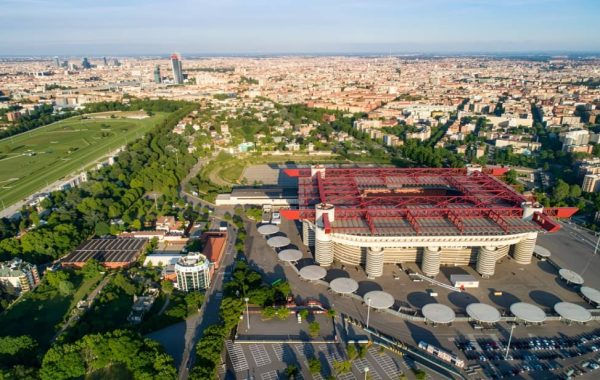
San Siro Stadium, officially the Stadio Giuseppe Meazza, is the home of both AC Milan and Inter and one of the most recognizable football venues in Europe. You don’t need a match ticket to enjoy it: the museum and stadium tour let you walk through areas fans never normally see, from the players’ tunnel to the pitchside.
The History of San Siro Stadium
The stadium opened on September 19, 1926, on the initiative of Piero Pirelli, then president of AC Milan. It was originally called the Nuovo Stadio Calcistico San Siro, held around 35,000 spectators, and was used only by Milan. Inter moved in as a tenant in 1947, and the two clubs have shared the ground ever since, which makes San Siro one of the few major stadiums in the world used by two rival teams.
In 1980, the stadium was renamed after Giuseppe Meazza, the legendary striker who played for both Inter and Milan. Most people still just call it San Siro.
What Makes San Siro So Distinctive
The stadium’s silhouette comes from the renovation ahead of the 1990 World Cup, designed by Giancarlo Ragazzi and Enrico Hoffer. It added a third tier and the 11 cylindrical towers that spiral around the exterior, linked by ramps. Capacity grew beyond 80,000 at the time and now stands at about 75,900 for football.
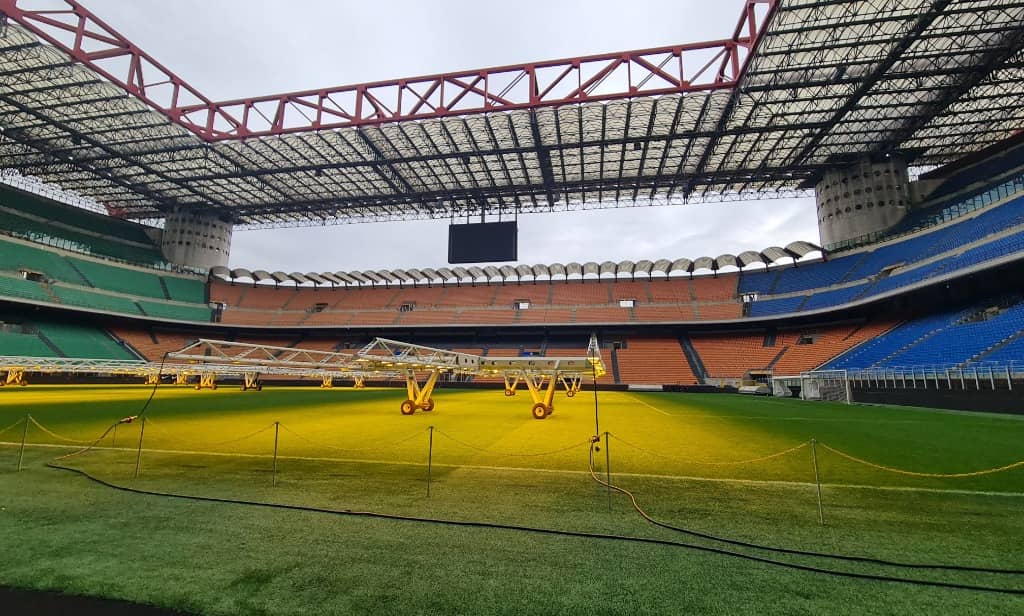
Inside, three steep rings create a bowl effect that brings fans close to the pitch. Italians nicknamed it the “Scala del Calcio,” a nod to Milan’s famous opera house, and a full house on a big night is something you feel in your chest.
The San Siro Museum and Stadium Tour
The visit starts in the museum, which displays shirts, trophies, and memorabilia from the history of both AC Milan and Inter. From there, the tour moves through the stadium’s most iconic spots:
- Dressing rooms: see where the home and away teams prepare before a match.
- Mixed zone and press area: the spaces where players and journalists meet after the game.
- Players’ tunnel and pitchside: walk the same route players take onto the field and look up at the stands.
- Honor stand: one of the best vantage points over the pitch.
Plan on 60 to 90 minutes, and up to two hours if you like to take your time. The standard tour runs in Italian and English, and an optional rooftop Skywalk can be added to the official visit for a fixed-time walk high above the stadium.
Tickets and Opening Hours
- Fixed-date ticket: from about 39 euros.
- Open-date ticket: about 30 euros, valid for three months.
- Family Pack (3 people): 102 euros.
- Children up to 5: free with an adult, with reduced fares for ages 6 to 14, visitors over 65, and some visitors with disabilities.
The museum and tour open daily from 9:30 a.m. to 5 p.m. between November and March, and until 6 p.m. from April to October. Buying online lets you enter by showing your barcode without queuing at the ticket office. Prices vary by ticket type, so confirm the current amount on the official site before booking.
How to Get to San Siro Stadium
The stadium sits at Piazzale Angelo Moratti on the west side of Milan. The easiest route is Metro Line M5 to San Siro Stadio. Tram 16 and bus 49 also stop at San Siro Stadio M5. From Milano Centrale, take the M2 to Garibaldi FS and switch to the M5.
The museum and tour entrance is beside Gate 8. On match and concert days, hours and access can change or close, so check the official calendar before you go.
After the Tour: Aperitivo in the Navigli Milan District
A stadium visit pairs well with an evening in the Navigli Milan district, the neighborhood of canals on the city’s southwest side. Only two main waterways remain, the Naviglio Grande and the Naviglio Pavese, meeting at the Darsena, a port built in 1603.
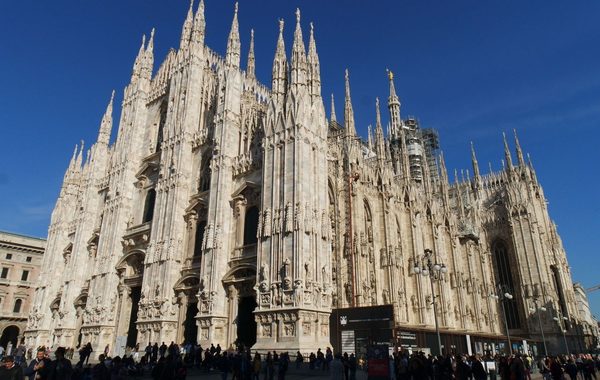
The canals were originally dug to move goods, including the marble used to build the Duomo, and Leonardo da Vinci is credited with improving the lock system that made them truly navigable. Most of the network was covered over in 1929.
Navigli changes completely after 5 p.m., when locals fill the canalside bars for aperitivo: order a drink and enjoy small snacks, often generous enough to replace dinner. Sunset along the Naviglio Grande is especially pretty, and on the last Sunday of each month an antiques market takes over its banks.
Match Days, Concerts, and Practical Tips
On match days and concert days, the schedule and route can change, and the visit may become more informal, though stadium staff are always present along the way. Tickets with a chosen date must be used that day and generally can’t be changed or refunded, so the open-date ticket is the safest choice if your plans are flexible. Groups of at least 50 people can book special rates in advance.
The museum and tour are accessible for visitors with reduced mobility, with a ramp, an elevator, and rest areas. The stadium route includes some stairs, but adapted itineraries are available for wheelchair users.
Where to Stay in Milan
After a day at the stadium and an evening by the canals, a comfortable base in the city makes the trip easier. Travelers looking for the luxury places to stay in Milan will find that The Collection offers an upscale option, while the best places to stay in Milan through Wynwood House give you easy access to the metro and the city’s main sights.
Frequently Asked Questions
Can you visit San Siro without a match ticket?
Yes. The San Siro Museum and Stadium Tour runs daily, except when events change the schedule, and lets you see the museum, dressing rooms, players’ tunnel, and pitchside without attending a game.
How long does the San Siro tour take?
Most visitors need 60 to 90 minutes for the museum and tour combined. If you want to take photos and explore at a relaxed pace, allow up to two hours.
What is the best way to reach San Siro Stadium?
Metro Line M5 to San Siro Stadio is the simplest option. Tram 16 and bus 49 also serve the stop, and on match days the metro avoids heavy traffic around the stadium.