The Mexico City cable car, officially known as Cablebús, is transforming the way millions of residents move across one of the world’s largest and most complex urban areas. Far from being just a tourist attraction, this innovative aerial transport system has become a symbol of modern mobility, social inclusion, and sustainable urban planning in Mexico’s capital.
With ambitious expansions planned for the coming years, the Mexico City cable car is set to play an even more important role in daily life and in how visitors experience the city from above.
What is the Mexico City cable car (Cablebús)?
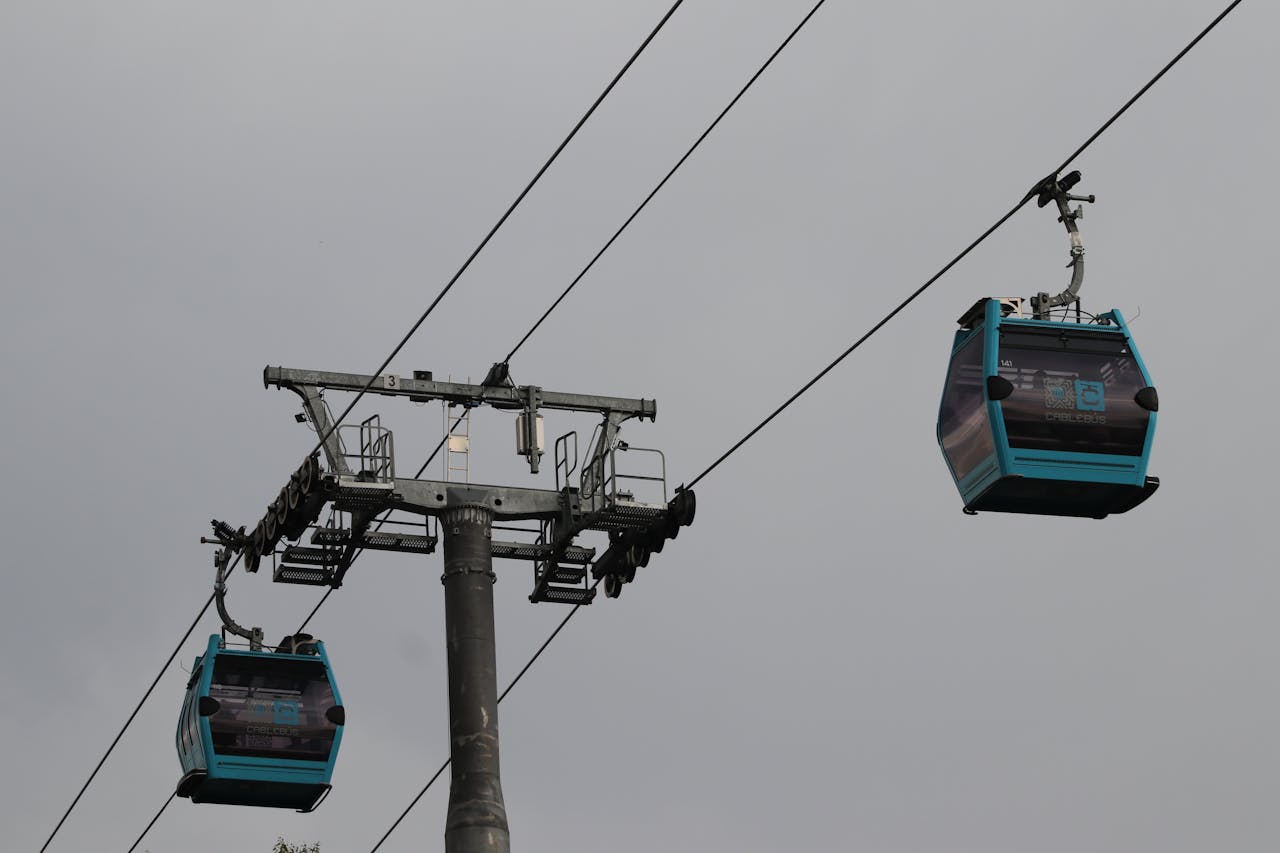
The Mexico City cable car is an urban aerial gondola system designed primarily for public transportation. Unlike traditional cable cars associated with ski resorts or scenic viewpoints, Cablebús functions as part of the city’s integrated transit network, alongside the Metro, Metrobús, and buses.
Each line consists of continuously moving cabins suspended from cables, allowing passengers to glide over densely populated neighborhoods, hills, and traffic-clogged avenues. The system is especially valuable in areas where steep terrain or informal urban development makes conventional transport difficult or inefficient.
Current Cablebús lines and how they work
Existing lines in operation
As of now, Mexico City operates several Cablebús lines, including Lines 1 and 3, built by the Austrian company Doppelmayr. Together, these lines already exceed 9 kilometers in length and serve thousands of passengers every day.
Cabins arrive every few seconds, minimizing wait times. Each cabin can carry multiple passengers and is designed to be accessible for people with reduced mobility, strollers, and bicycles.
Capacity and efficiency
The system is engineered for high efficiency. On busy lines, the Mexico City cable car can transport thousands of passengers per hour in each direction. Because cabins move continuously, boarding is smooth and predictable, reducing the stress associated with overcrowded buses or delayed trains.
Line 5: the future of the Mexico City cable car
A record-breaking project
One of the most ambitious infrastructure projects currently planned is Cablebús Line 5, which is expected to become the longest urban cable car line in the world. With a projected length of 15.2 kilometers, it will surpass similar systems globally once completed.
The inauguration of Line 5 is scheduled for 2028, marking a new milestone for the Mexico City cable car network.
Route and stations
Line 5 will feature 12 stations and connect key areas across the boroughs of Álvaro Obregón, La Magdalena Contreras, and Benito Juárez. These zones include residential neighborhoods that currently face long and complex commutes due to traffic congestion and limited direct transit options.
Investment and scale
The total investment for Line 5 is estimated at 7.9 billion Mexican pesos, reflecting the massive scale of the project. To put this into perspective, the budget is comparable to funding thousands of social housing units or multiple years of municipal public works in smaller cities.
The line will operate with 642 cabins and is designed to transport up to 3,000 passengers per hour per direction, significantly easing daily commutes.
How the Mexico City cable car improves daily life
Cutting travel times in half
One of the most immediate benefits of the Mexico City cable car is its impact on commuting times. Routes that previously took an hour or more by bus can be reduced to around 30 minutes using Cablebús. This time savings translates into better quality of life, more family time, and increased economic productivity.
Sustainability and urban impact
Cablebús is powered by electricity and produces no direct emissions during operation. By encouraging people to shift away from cars and informal transport, the Mexico City cable car contributes to reduced air pollution and a smaller carbon footprint.
Social inclusion and accessibility
Many of the neighborhoods served by Cablebús historically lacked efficient public transport. By connecting these areas to the broader city, the system promotes social equity and improves access to jobs, education, and healthcare.
Safety, challenges, and urban realities
While the Mexico City cable car represents a leap forward in mobility, it does not exist in a vacuum. Issues such as urban insecurity and violence continue to affect parts of the city. Although Cablebús improves transport efficiency, it cannot, by itself, resolve deeper social challenges.
That said, stations are equipped with security measures, lighting, and staff presence, and the elevated nature of the system avoids many of the risks associated with street-level travel.
Riding the Mexico City cable car as a visitor
Is Cablebús for tourists?
Although designed for locals, the Mexico City cable car has become increasingly popular with visitors. Riding it offers a unique aerial perspective of the city, revealing neighborhoods, markets, hills, and daily life rarely seen from typical tourist routes.
Tips for first-time riders
- Travel during daylight hours for the best views.
- Avoid peak commuting times if you want a calmer experience.
- Combine your ride with visits to nearby neighborhoods and cultural spots.
Where to stay to explore Mexico City easily
Choosing the right accommodation can enhance your experience of the Mexico City cable car and the city as a whole.
If you’re looking for upscale comfort and design, consider luxury places to stay in Mexico City by The Collection, offering refined spaces ideal for unwinding after a day of exploration.
For a flexible, apartment-style option close to key urban areas, explore places to stay in Mexico City by Wynwood House, perfect for travelers who want comfort, style, and independence while navigating the city.
The future of the Mexico City cable car
With the expansion of Line 5 and the city’s continued investment in aerial transport, the Mexico City cable car is poised to become a global reference for urban mobility. Doppelmayr’s growing presence in Mexico, combined with the system’s proven success, suggests that Cablebús will continue to expand and evolve.
More than a transport system, it represents a vision of a more connected, efficient, and inclusive city.
FAQs about the Mexico City cable car
What is the Mexico City cable car called?
It is officially known as Cablebús and forms part of the city’s public transportation network.
How long will Cablebús Line 5 be?
Line 5 is planned to be 15.2 kilometers long, making it the longest urban cable car line in the world once completed.
When will Line 5 open?
The inauguration of Cablebús Line 5 is scheduled for 2028.
Is the Mexico City cable car safe to use?
Yes. Cablebús is built with international safety standards, constant monitoring, and staffed stations.
Can tourists use the Mexico City cable car?
Absolutely. While it serves commuters, tourists can also ride it to enjoy unique city views and explore lesser-known neighborhoods.