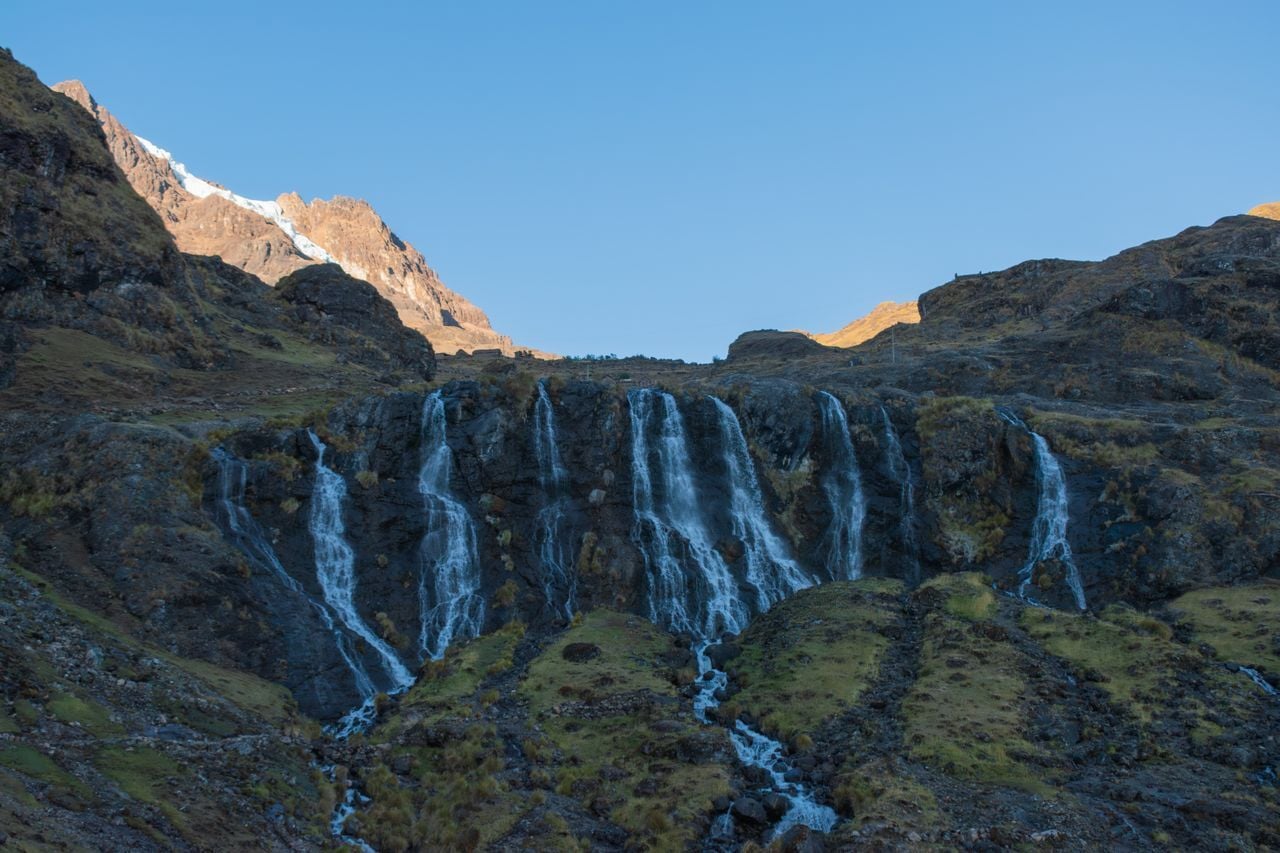
Peru's geography is a study in extremes — desert coastline, towering Andean peaks, and vast Amazonian rainforest. Between the mountains and the jungle lies the selva alta, or high jungle, where some of the most spectacular waterfalls in Peru cascade through cloud forest rarely seen by international travelers.
These waterfalls in Peru rank among the country's most photographed natural attractions. Here are the eight most beautiful, with practical details on reaching each one.
The 8 Most Beautiful Waterfalls in Peru
Catarata de Gocta — One of the Tallest Waterfalls on Earth
Gocta is widely considered the best of all the waterfalls in Peru, with a 771-meter drop that ranks among the tallest on the planet. Located in Cocachimba, 41 kilometers from Chachapoyas in Amazonas, it remained unknown to the outside world until documented in 2002 by German explorer Stefan Ziemendorff.
Reaching Gocta requires a hike of about two and a half hours, or horseback for an extra fee. Dozens of smaller cascades and dense cloud forest surround the main fall, and local legend tells of a golden-haired mermaid who lives within it. Tours cost around 120 soles per person.
Catarata Arcoíris — Where Sunlight Becomes Color
Near Satipo in the Junín region, Catarata Arcoíris owes its name — Rainbow Waterfall — to the way afternoon sunlight strikes its spray, producing a vivid rainbow. The fall is modest at only 20 meters, divided into two cascades, surrounded by abundant vegetation. Access runs southeast from Satipo to Mazamari, then a turnoff toward Puerto Ocopa across a wooden bridge. Entry is free, and most visitors go independently.
Catarata de Ahuashiyacu — The Laughing Water of Tarapoto
One of Tarapoto's main attractions in Peru's northern jungle, Ahuashiyacu takes its Quechua name from "laughing water," a reference to the sound of its 40-meter cascade splashing into the pool below, which resembles a natural swimming hole surrounded by thick jungle. The journey takes about 17 kilometers by car (30 minutes) plus a ten-minute walk. Entry is free; guided tours cost around 50 soles per person.
Catarata de Yumbilla — Peru's Second-Tallest Cascade
Yumbilla ranks as the fifth-tallest waterfall in the world and second-tallest in Peru, with a drop of nearly 900 meters across four stages, beginning at the San Francisco cave at 2,723 meters above sea level. Near Cuispes in the Bongará province of Amazonas, it sits within a natural bowl of vegetation and colorful rock, forming part of the broader Ruta de las Cataratas alongside the Chinata and Pabellón falls. A guided tour with a canoe journey is recommended, costing around 100 soles.
Catarata Gallito de las Rocas — Named for Peru's National Bird
Located in the Pampa Hermosa district of Satipo province, this waterfall is named for the gallito de las rocas (cock-of-the-rock), a colorful bird often spotted nearby. The fall drops a modest 20 meters, but the pool is ideal for swimming. The route runs from Satipo with a 41-kilometer journey to San Antonio, then a short 200-meter walk. Entry is free; a tour is recommended for the full experience.
Catarata del Río Tigre — Easy Access in Oxapampa
Just 14 kilometers from Oxapampa in the Pasco region, this waterfall offers a roughly 30-meter drop within the Oxapampa-Asháninka-Yánesha Biosphere Reserve. It is among the most accessible waterfalls in Peru, reachable on foot in about 45 minutes, crossing two hanging bridges. Rappelling is available on-site, entry costs just one sol, and the falls are open daily from 6:00 am to 5:00 pm.
Catarata de Tsomontonari — Twin Falls and a Natural Stone Staircase
In the Río Negro district of Satipo province, Tsomontonari is formed by two cascades: El Manto de la Virgen at 70 meters and La Reina de los Vientos at 40 meters, the latter giving the waterfall its name. A natural stone staircase lets visitors climb to the top — a vantage point rare among waterfalls in Peru. Small pools at the base allow swimming, and nearby rocks suit rappelling. The route runs 33 kilometers from Satipo plus a one-hour walk. Entry is free; tours cost around 130 soles.
Catarata Las Tres Hermanas — The Tallest Waterfall in Peru
Las Tres Hermanas is the tallest of all the waterfalls in Peru and the second-tallest in the world, trailing only South Africa's Tugela Falls. Its drop of 914 meters splits into three sections across a 12-meter width, located within Otishi National Park in Satipo province, within the Ene River basin.
Access is genuinely difficult — chartering a small aircraft with permission from SERNANP in Satipo is the recommended approach. The aerial view is extraordinary, revealing the falls surrounded by nearly untouched rainforest.
Waterfalls Near Cusco and Machu Picchu
Travelers heading to Cusco should know the region has its own waterfalls in Peru. Near Machu Picchu, the Aguas Calientes and Mandorpampa waterfalls can be visited before or after touring the citadel. In La Convención province, Siete Tinajas and Illapani are also well regarded — rewarding travelers who explore beyond Cusco's archaeological sites.
Where to Stay in Peru
Exploring the waterfalls in Peru often means basing yourself in regional hubs like Chachapoyas, Tarapoto, or Satipo, but many travelers combine a waterfall expedition with time in Peru's major cities.
For travelers seeking a premium experience throughout their trip, explore the best luxury places to stay in Peru — exceptional properties in Peru's finest destinations.
For a wider range of styles and budgets, discover the top places to stay in Peru — well-located properties that make exploring the country's natural wonders effortless.
FAQs
What is the tallest waterfall in Peru?
Catarata Las Tres Hermanas is the tallest waterfall in Peru, with a drop of 914 meters — the second-tallest in the world after South Africa's Tugela Falls. Located in Otishi National Park in Junín, it is extremely difficult to access, typically requiring a chartered flight with SERNANP permission. Gocta and Yumbilla, at 771 and approximately 900 meters, are the next tallest and considerably more accessible.
Which waterfall in Peru is the easiest to visit?
Catarata de Ahuashiyacu near Tarapoto and Catarata del Río Tigre near Oxapampa are among the most accessible waterfalls in Peru, both requiring only short walks of 10 to 45 minutes with low or no entry fees. Catarata Arcoíris near Satipo is similarly easy to reach and free to visit.
When is the best time to visit waterfalls in Peru?
The dry season, from May to September, offers the most comfortable hiking conditions. Waterfalls tend to be more dramatic during or just after the rainy season, from November to April, when increased rainfall feeds the cascades. Most routes described here can be visited year-round, though trail conditions are more challenging during heavy rain.