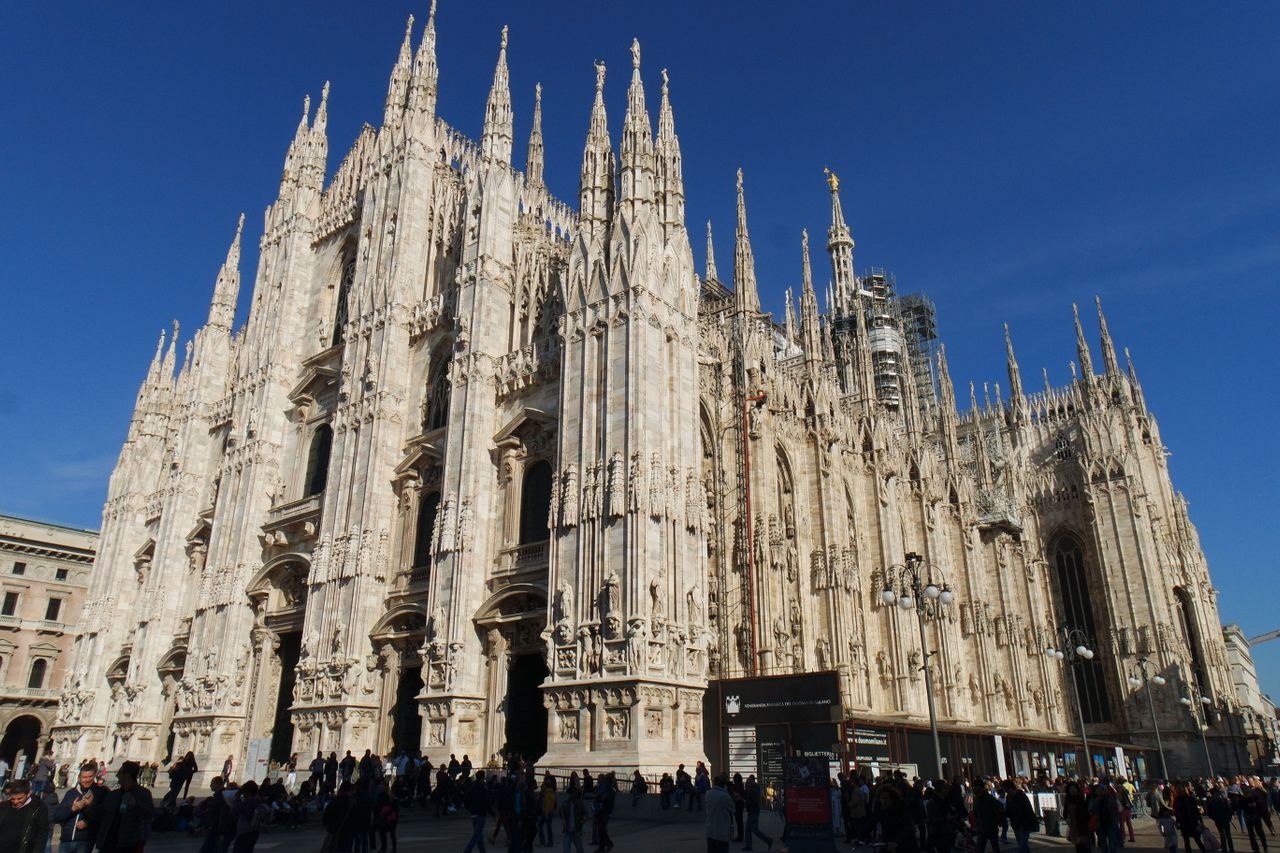
The Milan Cathedral, known locally as the Duomo di Milano, is the single most visited landmark in Milan and one of the largest Gothic cathedrals in the world. Its forest of spires, thousands of statues, and rooftop terraces have made it the defining symbol of the city for over six centuries.
The History of the Milan Cathedral
Construction on the Duomo began in 1386 and wasn’t fully completed until 1965, spanning nearly five centuries of work. The cathedral was built on a site that had held the Basilica of San Ambrosio since the 5th century, later joined by the Basilica of Santa Tecla in 836, both of which were destroyed by fire in 1075. Gian Galeazzo Visconti commissioned the new cathedral as part of a broader effort to renew the area and celebrate the Visconti family’s territorial expansion.
Over the centuries, the project was carried out by the “Fabbrica del Duomo,” an institution of roughly 300 workers led by architect Simone da Orsenigo, with Visconti granting it exclusive use of marble from the Candoglia quarry and exemption from taxes. In 1389, French architect Nicolas de Bonaventure took over as chief architect, giving the cathedral its strong Gothic character. The exterior is clad in pale pink-white marble, rising into a dense arrangement of spires and towers topped with statues overlooking the city. In 1774, sculptor Giuseppe Perego added a gilded copper statue at the cathedral’s highest point, known as the Madonnina, which has since become a symbol of Milan itself. The finished cathedral blends international Gothic style with traditional Lombard architecture into something unique to Milan.
Inside the Duomo
Despite its massive scale, the interior of the Milan Cathedral feels surprisingly intimate. Colorful stained-glass windows depicting biblical scenes cast soft, colored light across the floor, and a marble staircase leads down to the Cathedral Treasury, where visitors can see early Christian and Romanesque objects. The cathedral remains an active church and the seat of the Archdiocese of Milan, with religious services held regularly inside.
The interior is organized into five naves, one central and four lateral, separated by around forty pillars, with a transept leading to the choir and apse. The central nave rises 45 meters high, built in brick and finished in marble. At 157 meters long and covering 11,700 square meters, the cathedral can hold more than 40,000 people, making it one of the largest Catholic cathedrals anywhere in the world.
Climbing to the Rooftop Terraces
One of the most popular parts of any Duomo visit is climbing to the rooftop terraces, reachable by stairs or elevator. Up close, visitors can examine the cathedral’s spires and more than 2,000 statues in detail, something the view from the street simply doesn’t allow. Along with a closer look at the architecture, the rooftop offers sweeping views over Milan, making it a worthwhile stop whether the weather is clear or overcast.
The Last Supper: A Nearby Essential
Just a short walk from the Duomo, the Cenacolo Vinciano houses Leonardo da Vinci’s “The Last Supper,” one of the most famous paintings in the world. The mural is housed in the refectory of the Santa Maria delle Grazie church, a UNESCO World Heritage Site, and tickets for the Last Supper in Milan tend to sell out well in advance, so many visitors book it alongside their Duomo visit to make the most of a day in this part of the city.
Other Attractions Near the Duomo
The Pinacoteca Ambrosiana, also within easy walking distance, was originally founded to inspire new artists and today holds masterworks including Leonardo’s “Musician,” Caravaggio’s “Basket of Fruit,” Titian’s “Adoration of the Magi,” Botticelli’s “Madonna of the Pavilion,” and Jan Brueghel’s “Vases of Flowers,” among others.
Tickets and Visiting the Milan Cathedral
To skip the long lines that typically form at the entrance, booking a guided group tour is generally recommended, and many options include access to the rooftop terraces or a combined ticket for the Last Supper. A private guide is also available for visitors who want a more personalized pace, including a walk through Milan’s historic center afterward.
Standard ticket options include priority entry to the Duomo with an audio guide, or the Duomo Pass with elevator access to the terraces plus an audio guide. These tickets typically bundle in the Duomo itself, the Crypt of San Carlo, the Archaeological Area, the Duomo Museum, the Church of San Gotardo, and the rooftop terraces.
Hours and Location
The Milan Cathedral is open daily from 8 a.m. to 7 p.m. It sits in Piazza del Duomo, easily reached by metro lines 1 or 3 at the Duomo stop, right in the heart of the city.
Where to Stay Near the Milan Cathedral
After a day exploring the Duomo’s terraces and nearby museums, having a comfortable base close to Piazza del Duomo makes it easy to return for an evening view of the cathedral lit up against the sky. Travelers looking for the luxury places to stay in Milan will find that The Collection offers an upscale base just minutes from the cathedral. For more flexible options, the best places to stay in Milan through Wynwood House put guests within easy walking distance of the Duomo and the rest of the historic center.
Frequently Asked Questions
How much time should I plan for visiting the Milan Cathedral?
Most visitors spend 1.5 to 2 hours exploring the interior and climbing to the rooftop terraces. Adding a Last Supper viewing nearby can extend a visit to a half day, especially since that ticket requires a separate, timed reservation.
Do I need to book tickets in advance for the Duomo?
Yes, booking ahead is strongly recommended, since long lines are common at the entrance, especially for rooftop terrace access. A combined ticket with the terraces, audio guide, and surrounding sites helps avoid multiple separate lines.
Is the Last Supper located inside the Milan Cathedral?
No. Leonardo da Vinci’s “The Last Supper” is housed in the Cenacolo Vinciano, inside the Santa Maria delle Grazie church, a short walk from the Duomo. It requires a separate, timed ticket that often sells out well in advance.